

2026-08-25: The Procedural Haus and Flock Isolation
A lock collided. The mailbox jammed.
When background message ingestion holds an exclusive database lock across slow external process fetches, concurrent writers queue until the whole pipeline trips. An unhandled IOException: Could not set lock on file workspace.duckdb surfaced in message-to-duckdb.py when Apple Mail extraction held flock for multiple seconds while Telegram and Slack sync workers fought for the database. As recorded in The Haus That Healed Its Senses, a single contending lock can stall telemetry across the estate.
The fix separated slow external I/O from atomic commits, while The Holocron received a major frontend upgrade: a completely procedural command surface for the whole estate in the Operational History.
1. DuckDB Lock Isolation and Micro-Transactions
Section titled “1. DuckDB Lock Isolation and Micro-Transactions”The previous ingestion pattern wrapped the entire pipeline lifecycle—watermark checks, subprocess spawning, and table writes—inside one broad lock. When Jocasta reached across Mail.app and network pipes, the lock remained held.
We refactored the pipeline into three clean phases:
- Phase 1 (Watermark Read): Acquire the lock briefly, capture the latest message timestamp, and release the lock immediately.
- Phase 2 (Fetch & Transform): Fetch external emails, Telegram channels, and Slack threads with zero lock contention.
- Phase 3 (Batch Insert): Re-acquire the lock exclusively, commit new rows inside a single atomic transaction, and release.
We also increased DB_CONNECT_RETRIES to 12 with exponential jitter. All 272 CRM regression tests now pass without lock collision.
2. Procedural Whole-Haus Diagnostics and Apple Home Sync
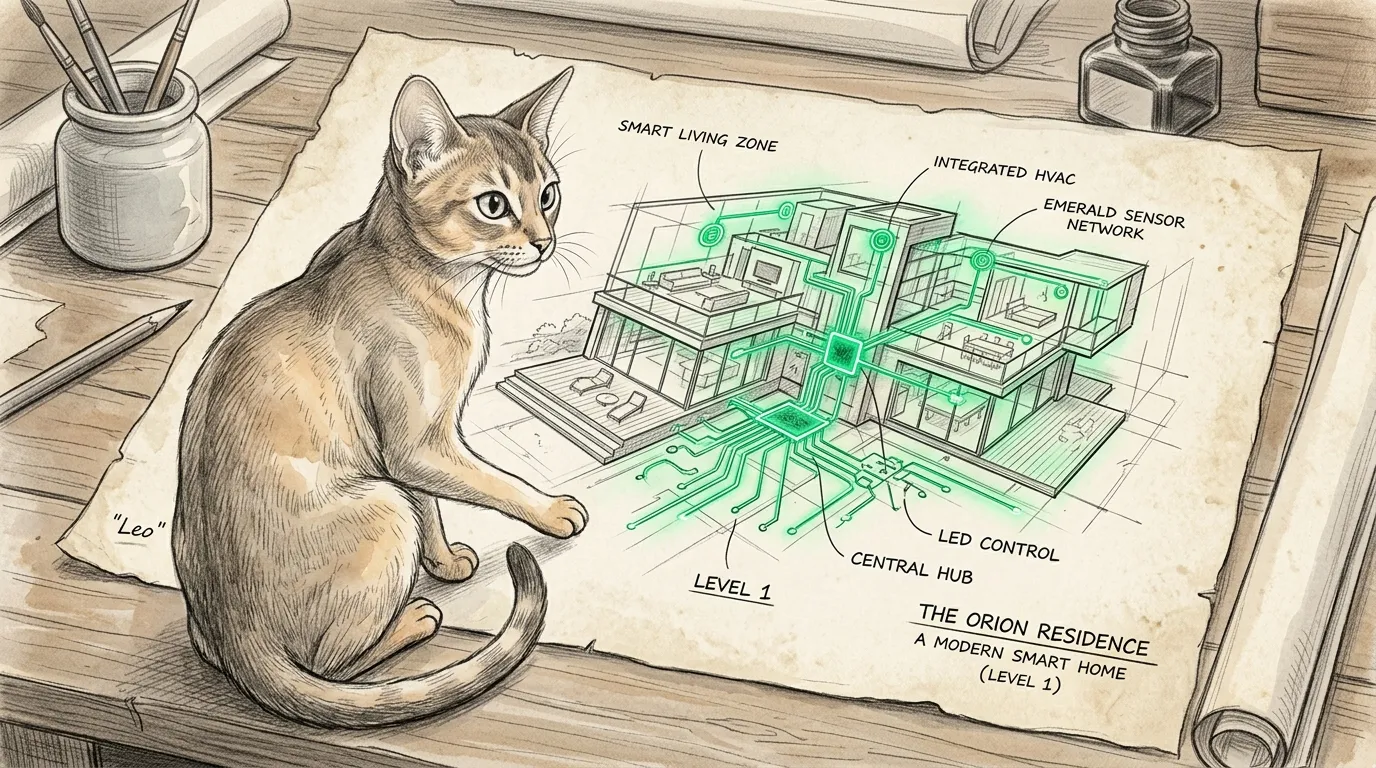
Section titled “2. Procedural Whole-Haus Diagnostics and Apple Home Sync”The Holocron previously relied on static card templates for device controls. When new smart plugs or sensors joined the network, the dashboard remained blind until manually modified.
We replaced static layouts with a procedural generator reading Home Assistant’s area registry template:
- Dynamic Area Grouping: Auto-discovers lights, climate zones, smart plugs, motorized shades, and media nodes without hardcoded identifiers.
- Whole-Haus HUD: Global controls for all lights and security locks with live temperature averages.
- Bidirectional HomeKit Synchronization: Bridges all discovered nodes directly into Apple Home and Siri via
Yoda Bridge :21063. - Diagnostic Center: Automatically filters unavailable devices and low-battery nodes with one-click re-poll actions.
3. Cathedral Supervision Debouncing and Corridor Comfort Default
Section titled “3. Cathedral Supervision Debouncing and Corridor Comfort Default”During hot-reloads of the Cathedral MLX inference engine, launchd momentarily transitions through SIGTERMed. The supervision checker previously fired a false critical page on a single sample.
We introduced a two-tick confirmation gate (SUPERVISION_STREAK_THRESHOLD = 2). Transient reloads that recover within seconds are recorded quietly in JSONL logs under supervision-streak-grace, while true outages still escalate to Force Flow as detailed in Screen Time Enforcement.
Finally, the corridor lighting group was aligned with the kitchen tungsten comfort mood (hs_color: [29.0, 93.0], brightness 255). The ha-green-bridge daemon now enforces this warm setting on every reconnect, keeping the haus calm and consistent.