

Screen Time Enforcement — Closed-Loop Edition
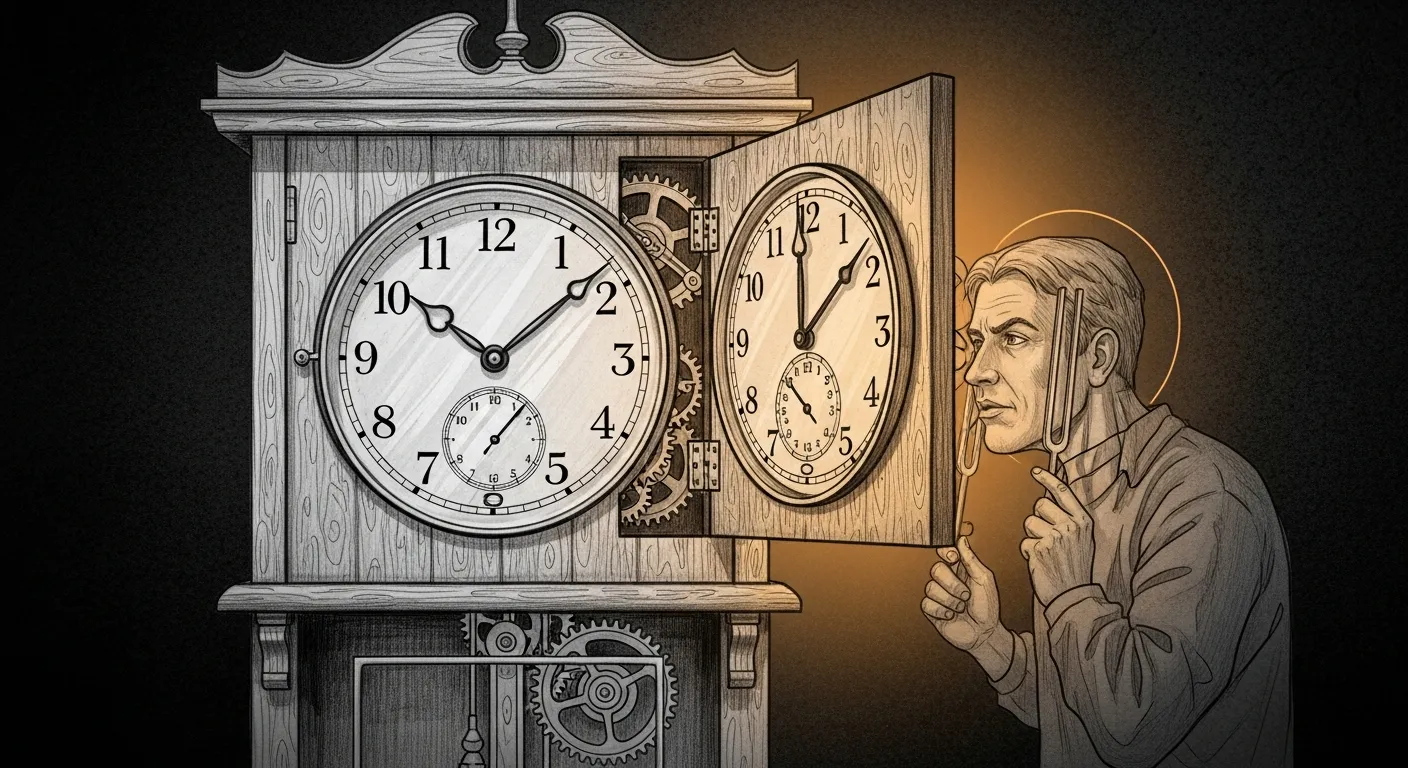
The log reported five blocked devices. Netflix said otherwise. Both were telling the truth about different things — which is the worst class of bug there is: the kind that files a clean report while the thing it reports on quietly does nothing.
A screen-time system that says “blocked” but streams Netflix is worse than one that admits it’s broken. For two nights in April, ours did exactly that — the Force Flow daemon on manoir logged BLOCKED against seven MACs while five of them stayed happily online, and the only people who noticed were the parents, who were supposed to be the ones the curfew let sleep. This page is the autopsy of April 16–18, 2026, and the closed-loop contract that now governs every enforcement action. The fix went live on manoir on 2026-04-18, E2E-tested and regression-gated.
What broke
Section titled “What broke”Force Flow’s _block_mac() called the Firewalla bridge and logged BLOCKED <mac> — curfew based on whether the response was truthy:
# Beforeasync def _block_mac(session, mac, reason="curfew"): result = await _bridge_post(session, f"/host/{mac}/pause") if result: log.info(f"BLOCKED {mac} — {reason}") return resultThe Firewalla SDK, when it got into a certain stale-policy state, would answer HTTP 200 with {"success": false, "errors": [{}]}. That’s a non-empty dict. if result: is truthy. BLOCKED got logged. The Firewalla did nothing.
The first night this happened (April 16), five of seven curfewed MACs stayed online. Log said they were blocked. They weren’t. Nobody noticed because everyone was asleep, which was what the curfew was supposed to guarantee.
The second night (April 17), same five MACs, same silent pass. The parents noticed because streaming was happening during “quiet hours.”
Two traps, stacked
Section titled “Two traps, stacked”Debugging the incident surfaced a second trap that amplified the confusion:
Combined effect: while diagnosing live, the first pass of verification reported the wrong conclusion — said devices were blocked when they were passing. Which is how we ended up telling the parent “RED tout est bloqué” when the opposite was true. (The parent, to their credit, asked “es-tu certain que ya plus rien qui passe?” and the cross-check caught it.)
The fix — closed-loop contract
Section titled “The fix — closed-loop contract”Every write to the Firewalla now goes through a three-step contract. No exceptions.
async def _verify_acl(session, mac, expected):    await asyncio.sleep(1.0)    current = await _bridge_get(session, f"/host/{mac}")    acl = (current or {}).get("policy", {}).get("acl")    return acl is expected

async def _block_mac(session, mac, reason="curfew"):    result = await _bridge_post(session, f"/host/{mac}/pause")
    # 1. Require explicit success, not truthy non-empty dict    if not result or not result.get("success"):        log.error(f"BLOCK FAILED {mac} — {reason}: bridge returned {result}")        return None
    # 2. Verify the side effect landed on the control plane    if not await _verify_acl(session, mac, expected=False):        log.warning(f"BLOCK DRIFT {mac} — {reason}: bridge ok but acl stayed true; retrying once")        # 3. Retry once, then escalate        retry = await _bridge_post(session, f"/host/{mac}/pause")        if not retry or not retry.get("success") or not await _verify_acl(session, mac, expected=False):            log.error(f"BLOCK ESCALATION {mac} — {reason}: retry did not stick; Firewalla drift")            return None
    log.info(f"BLOCKED {mac} — {reason}")    return result
Same shape for _unblock_mac — asserts acl == True after the call, retries on drift, escalates to UNBLOCK ESCALATION on failure.
Why “closed-loop” and not just “check the response”
Section titled “Why “closed-loop” and not just “check the response””The bridge’s success field is a partial signal. The Firewalla SDK can accept the command, return success: true, and still not propagate the change to the enforcement tier (happened to us with the metallib-stalled SDK state). The only authoritative signal is re-reading the target’s policy on the Firewalla itself. If the observed state doesn’t match the intended state, the action didn’t happen, regardless of what any intermediary said.
This is Living Force principle 12: commands can’t lie either.
The log grammar
Section titled “The log grammar”The new enforcement path emits exactly four terminal states per MAC, and nothing else can produce a BLOCKED line:
| Log line | Meaning | Action |
|---|---|---|
BLOCKED <mac> — <reason> | Success: bridge said success: true AND policy.acl == false confirmed | None — working |
BLOCK FAILED <mac> — <reason>: bridge returned <dict> | Bridge said failure explicitly | Dispatch to Living Force queue; surface the bridge dict |
BLOCK DRIFT <mac> — <reason>: bridge ok but acl stayed true; retrying once | Bridge succeeded but state didn’t change | Self-retry fires immediately |
BLOCK ESCALATION <mac> — <reason>: retry did not stick; Firewalla drift | Retry failed too | Operator attention — Firewalla SDK may need a bridge restart |
Unblock has mirror lines (UNBLOCKED, UNBLOCK FAILED, UNBLOCK DRIFT, UNBLOCK ESCALATION).
The E2E regression gate
Section titled “The E2E regression gate”tests/test-screen-time-enforcement.sh exercises the full closed-loop in under 30 seconds:
- Endpoint + bridge token reachability
/screen/block→ observeacl=Falseon the bridge- Log assertions:
BLOCKEDpresent, noFAIL/DRIFT/ESCALATION /screen/unblock→ observeacl=Truerestored- 12h auto-override cleanup (the override
/screen/unblockcreates would otherwise suppress the next curfew) - Nintendo’s standalone 22:30 schedule (moved out of
shared_devicesso it doesn’t inherit Albert’s 23:00 phone curfew) - God Mode parent-override path for both consoles
- Self-cleaning final state
Currently 18 pass / 0 fail. Any regression to truthy-check silent-success will fail L3 (“no FAIL/DRIFT/ESCALATION”) loudly.
God Mode — the parent override
Section titled “God Mode — the parent override”Parents can override both consoles (VRVANA PC + Nintendo Switch) from the Holocron dashboard. The button is styled after Doom’s IDDQD cheat, red palette, three duration presets:
| Button | Effect |
|---|---|
| +30 MIN | Override vrvana_pc and nintendo_switch for 30 minutes |
| +60 MIN | Same, 60 minutes |
| +120 MIN | Same, 120 minutes (the backend max from override_max_minutes) |
| STOP | Clear both overrides immediately (minutes: 0) |
Albert’s phone curfew is unaffected — the phone keeps its 23:00 weekend bedtime so he can read or play chess while falling asleep. Only the consoles get bumped.
STUDY MODE — per-child curfew override
Section titled “STUDY MODE — per-child curfew override”When a kid hits an end-of-school study crunch and needs an earlier
cutoff than the regular weekday schedule, the cleanest path is the
study_mode block at the top of that child’s schedule in
devices.yaml — one more layer on the screen-time
architecture’s stack of who-is-curfewed-when:
family: albert: schedule: study_mode: enabled: true curfew: '20:00' wake: '07:00' until: '2026-06-25' # last day of school year weekday: { curfew: '21:30', wake: '07:00' } weekend: { curfew: '23:00', wake: '09:00' }Precedence is study_mode > holiday > weekend > weekday in
_get_effective_schedule(). When enabled: true and today is
<= until, the study curfew wins every other layer — weekday,
weekend, and holiday alike. Set enabled: false (or delete the
block) to revert; no daemon restart needed beyond the standard
launchctl kickstart -k gui/$UID/com.sanctum.force-flow after
editing the yaml. Force Flow’s GET /screen/status reports
schedule_type: study while it’s active so the Lovelace card and
the morning briefing both surface the override.
Scope of the cut. study_mode on the child profile is what
shared_devices (PS5) reads via the any_child_curfew_active
loop, so the PS5 is automatically cut when the kid’s study window
starts. The child’s personal_devices (iPhone, iPad) are
intentionally NOT blocked by the daemon — Apple Screen Time
already enforces those, and double-blocking would create
diagnosis ambiguity. For every other screen the kid uses to
not-study (PC, Apple TVs, Nintendo Switch, Steam Deck), mirror
the same study_mode block at screens.<name>.schedule.study_mode
so each fires at the same boundary. Apple TVs in legacy
flat-curfew format need to be migrated to the nested schedule:
dict before study_mode can attach.
Editing from the Holocron app
Section titled “Editing from the Holocron app”As of 2026-05-25 the operator can edit every screen-time setting
from the Holocron parent app — no more direct devices.yaml
editing required for routine changes. Three new sub-components in
ScreenTimePanel.tsx call three matching Force Flow write
endpoints:
| UI | Endpoint | Body |
|---|---|---|
| Mode étude card | POST /screen/study-mode/<child> | {enabled, curfew, wake, until, screens?} |
| Schedule editor | POST /screen/schedule/<target> | {layer, curfew, wake} |
| MAC editor | POST /screen/screens/<screen>/macs | {add|remove|set: [mac]} |
Every write goes through _apply_devices_yaml_change() in
force_flow.py which: snapshots devices.yaml.bak-<op>-<ts>
beside the file, validates the parsed result via ruamel.yaml
round-trip (preserves comments + quoting), atomic-writes via
tmpfile rename, audits to ~/.sanctum/logs/devices-yaml-changes.jsonl,
then threaded-kickstarts Force Flow with a 500 ms delay so the
HTTP response flushes before the daemon respawns. Validation
failures (bad MAC format, unknown target, bad HH:MM) return 400
without snapshotting or kickstarting. The op log is the audit
trail; the snapshot is the rollback path.
Rollback
Section titled “Rollback”Layer by layer. Each step is reversible in one command.
# Revert the closed-loop code fix only (keep docs/tests) /Users/neo/.sanctum/screen-time/screen_time.py && \ launchctl kickstart -k gui/$(id -u)/com.sanctum.force-flow'
# Full restore from the weekly snapshotshasum -a 256 -c ~/Backups/sanctum-mini/sanctum-mini-20260418-*.tgz.sha256The whole affair cost two nights of quiet Netflix and one confident, wrong “RED tout est bloqué.” What it bought is a rule the haus now applies to everything that writes to hardware: the acknowledgement is a claim, the re-read is the truth, and a curfew you cannot verify is one the kids have already beaten. The daemon no longer gets to tell the parents it did its job. It has to show them.
The same honesty rule applies to the notify path. When the bridge circuit opens CRITICAL and later closes itself, Signal must hear the restore — not only the dashboard. See The Restore That Never Rang.