

The Living Force
The self-healing doctrine — ten principles, eight phases, and the incident log that birthed them.
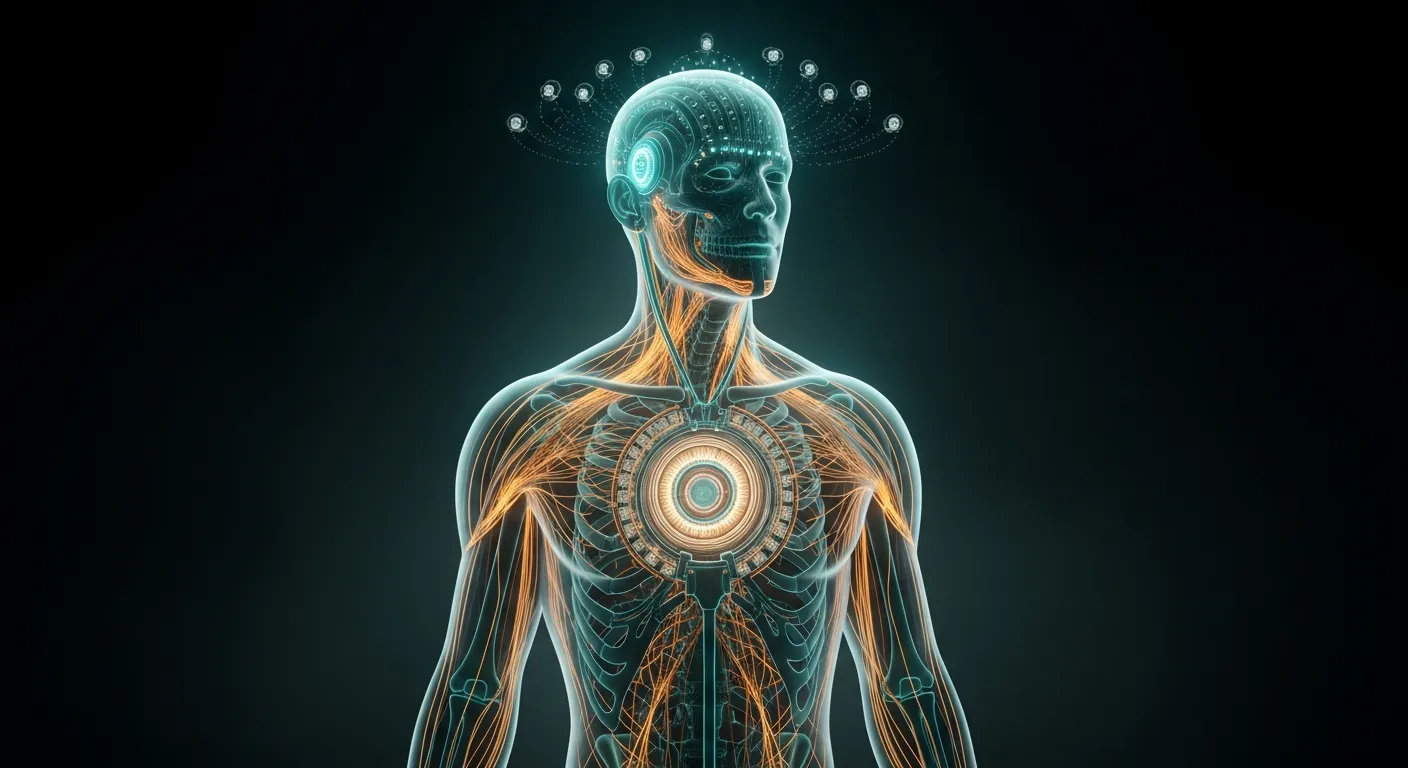
At 02:47 on a Tuesday in April, an Xbox in the basement quietly joined the Wi-Fi. By 02:47:03, it was blocked at the router, a Signal message was sitting on a phone nine hundred kilometres away, a curfew violation was recorded in a SQLite database in a service named after the Sermon on the Mount, and a dashboard banner was already glowing amber. Nobody woke up. The haus, as of that moment, had noticed.
That is Sanctum working correctly. Thirty-eight services, two machines, one private bridge, and an ethos that matters more than any individual technical choice: we are building this like a body, with an immune response that sometimes wakes you up gently and sometimes does not wake you up at all. The docs below are the anatomy chart.
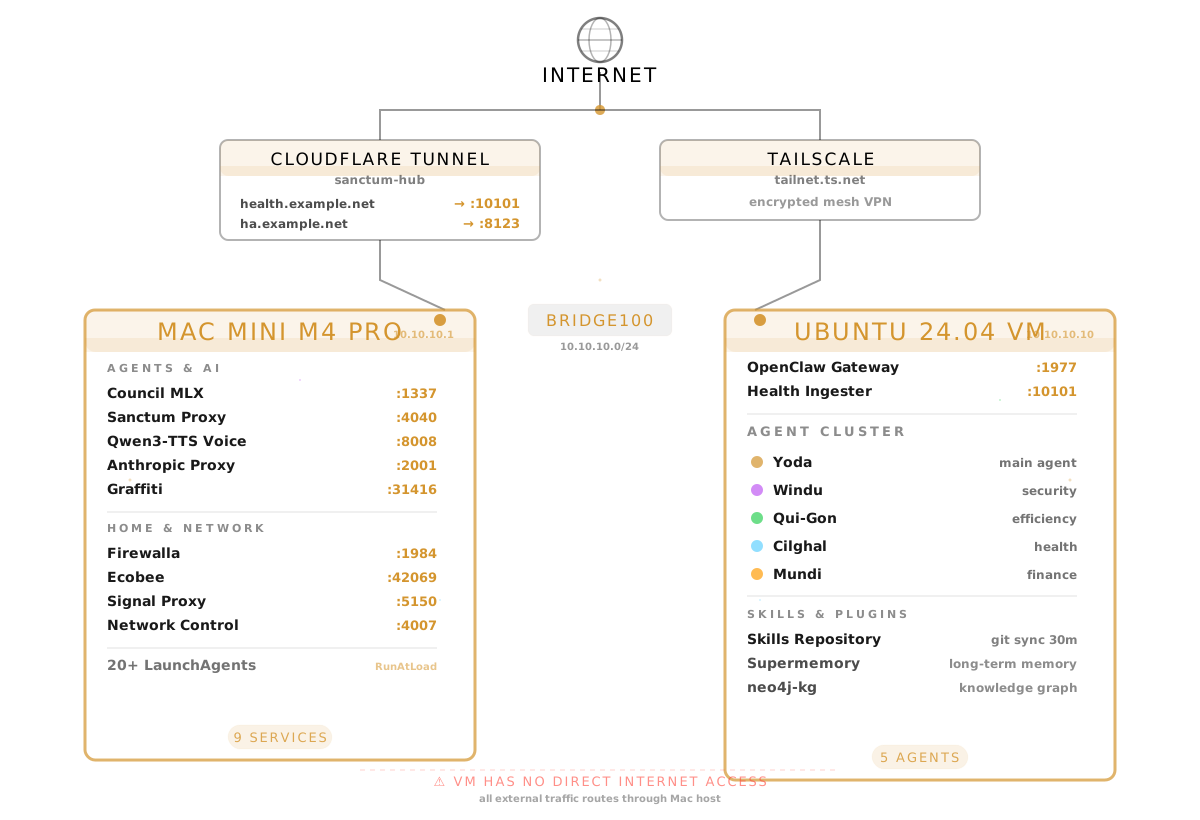
Physically, Sanctum is a Mac Mini M4 Pro and a Lima vmType=vz Ubuntu VM running on it, connected by a private bridge100 interface on 10.10.10.0/24. The Mac is where hardware lives: Apple Silicon inference, Sonos, Signal, HomeKit, anything that has to touch a USB port or a microphone. The VM is where the agent cluster lives: five specialized intelligences with no direct route to the internet — an air-gapped tenant with an indoor-plumbing privilege.
One more principle: the Council is plural on purpose. The current assignments live on the Council page:
The Council is plural on purpose — different Jedi run on
different model families so a single prior can't dominate the
synthesis. As of last roster refresh: Yoda on claude-fable-5, Ki-Adi-Mundi on grok-4.5, Qui-Gon on Devstral-Small-2-24B-Instruct-2512-4bit, Windu on gemini-3.1-pro-preview, Cilghal on qwen3.6-27b-4bit-champion-ablated, Jocasta on qwen3.6-27b-4bit, and Mon Mothma on claude-opus-5. See the full Council roster for the table with provider URLs and fallbacks.
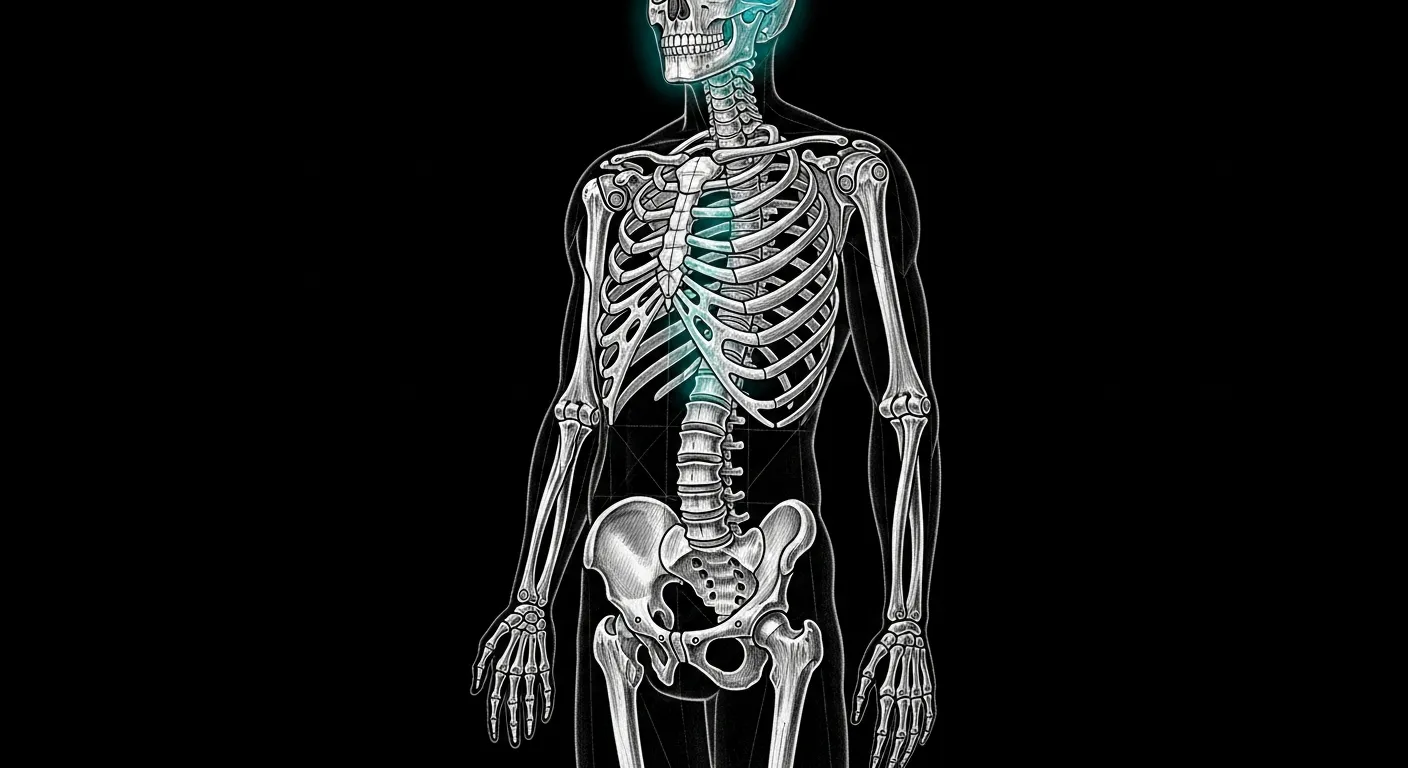
The bones are written in Rust and live in the sanctum-rs workspace — the parts of the system that have stopped redesigning themselves. Once a service crosses into sanctum-rs/services/ and is built and deployed as the running launchd unit, it becomes structural: a single deploy binary, compile-time guarantees on its interfaces, and a slot that either holds or doesn’t.
Two services meet that bar today:
| Bone | Port | What It Holds Up |
|---|---|---|
sanctum-watchdog | 2187 | The Living Force incarnate. Checks every service every ten minutes, self-heals the ones it can, escalates the ones it can’t. Ships two binaries — sanctum-watchdog and the daemon sanctumd that launchd actually runs. |
sanctum-proxy | 4040 | The cloud-tier model router. Classifies requests, applies daily cost caps, falls back through a configured chain before giving up. |
sanctum-firewalla’s Rust binary is compiled and waiting, but its live :1984 listener is still the Node bridge — built is not deployed, so tools/rust_readiness.py parks it at porting with the only recommendation that matters: cut the launchd unit over. Bones must be earned, then occupied.
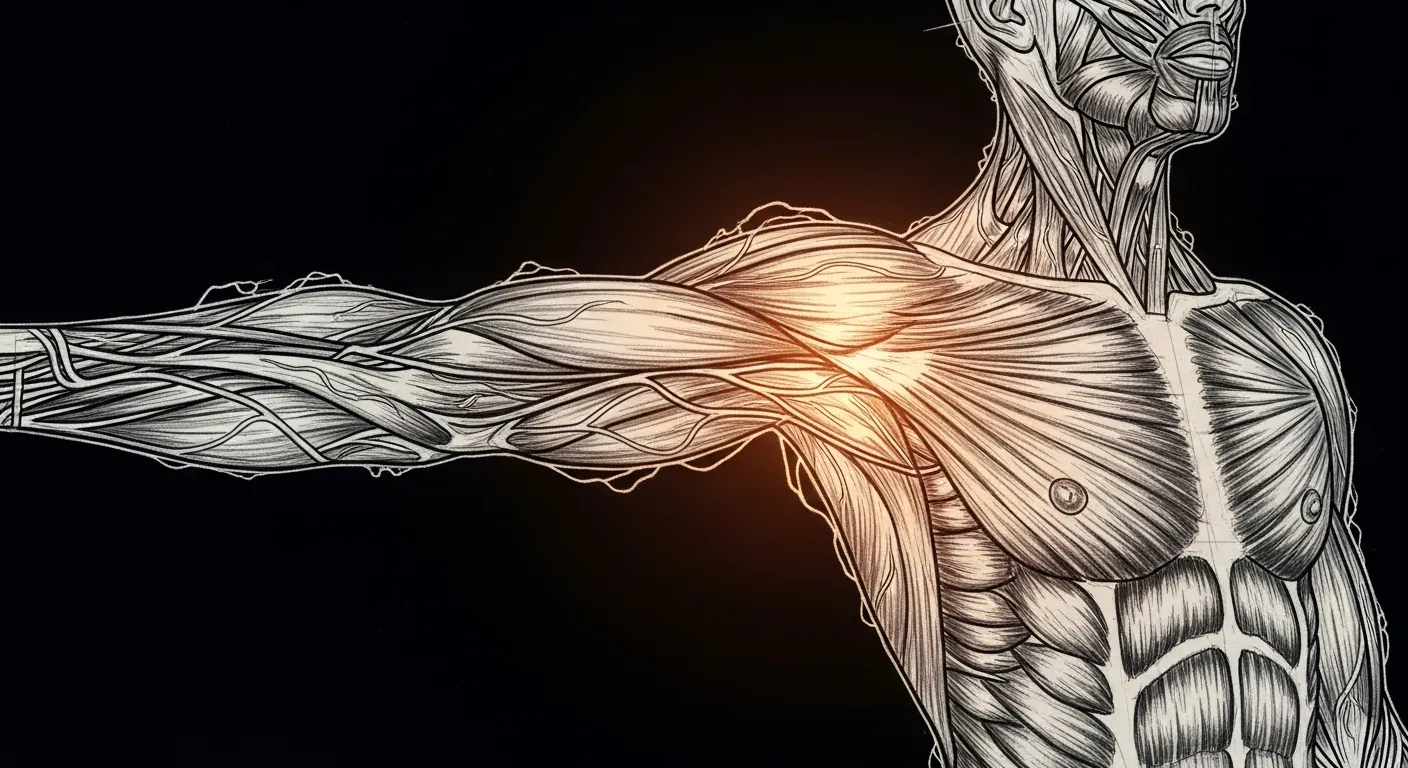
The flesh is Python — how we find out what a service is before we carve it in Rust. Everything in ~/.sanctum/force-flow/ or the sanctum-screen-time repo is there because its feature shape is still moving — new curfew edge cases, a homework mode that keeps acquiring exemptions.
| Muscle | Port | What It’s Still Figuring Out |
|---|---|---|
force-flow | 4077 | The unified notification hub. iPhone push, Sonos TTS, Signal via signal-cli daemon, dashboard banners, macOS Notification Center. The channel list keeps gaining members. |
haus-control | — | Curfew, wind-down, homework mode, credits, guests. Deployed alongside force-flow. The rules here change whenever a teenager finds a loophole. |
yoda-tts-worker | 8011 | The Python voice backend — Chatterbox cbx-yoda — answering on :8011 under the com.sanctum.yoda-tts-worker unit, behind the live Rust sanctum-tts front door on :8008. |
Flesh hardens. The current rust_readiness readout puts force-flow alone in the hardening stage — feature velocity slowing, but not zero. haus-control is still firmly organic, the busiest service on the chart with 42 commits in thirty days. It crosses when the guest-approval flow stabilises, and not a day before.
Between bones and flesh runs a network of private pathways — bridge100 on the Mac–VM axis, plus well-known local ports services use to find each other without DNS. The rule is simple: no service reaches across the bridge for a remote call if a local one does the same job. Every cross-service conversation is a few hundred microseconds on loopback, so nothing interesting depends on the router’s mood at 3 AM.
Mac Mini 10.10.10.1 ├─ 1111 command-center ├─ 1337 sanctum-mlx (mTLS) ├─ 1984 firewalla bridge (Node) ├─ 2187 sanctum-watchdog ├─ 3301 sanctum-mlx-devstral (coder) ├─ 4040 proxyd ├─ 4077 force-flow ├─ 8008 sanctum-tts (→ cbx-yoda :8011) ├─ 8055 sanctum-server router (BOSS) └─ 42069 sanctum-memory │ bridge100 10.10.10.0/24 │ Ubuntu VM 10.10.10.10 ├─ openclaw-gateway (systemd) ├─ Yoda, Windu, Qui-Gon, │ Cilghal, Mundi └─ outbound → 10.10.10.1 onlyAny external dependency — an Anthropic call, a git pull — leaves through a Mac-side proxy or a Tailscale tunnel: either excellent security architecture or the opening scene of a containment thriller. It has been both.
Each agent is a specialized perception, routed by the Smart Router to the tier that fits the job: cloud for long-horizon synthesis, local-ops for code, local-secure for anything that must never leave the machine.
| Agent | Role |
|---|---|
| Yoda | Consigliere — absorbs everyone else’s escalations, advises the Don |
| Windu | Security master — Firewalla rules, PF policy, perimeter audits |
| Qui-Gon | Infrastructure & code — Docker health, systemd units, recovery |
| Cilghal | Health — Apple Health, sleep, cognitive scaffolding |
| Ki-Adi-Mundi | Finance — Triptyq deal flow, personal treasury |
| Jocasta | Archivist — CRM, communications, long memory |
| Mon Mothma | Operations — Force Flow + Living Force orchestration |
| Ahsoka | Satellite — the agent that will follow you when you leave the haus (reserved — chalet node, not yet deployed) |
| Tommy | Guardian Spirit — the dead cat with strong opinions about network segmentation |
The routing rule is not democratic, and (Neuro)diversity is Paramount explains why a council of one model in seven robes is not a council at all. General chat can be downgraded mid-conversation; the privacy-bound seats cannot. The proxy’s JSONL usage log is the ground truth for what actually ran — an agent doesn’t always know which tier served its last turn.
Infrastructure rots. Entropy is undefeated. sanctum-watchdog and the Living Force doctrine around it exist because a running system is a continuous low-grade medical emergency that somebody must keep checking. Every ten minutes it either (a) believes a service’s all-clear, (b) restarts it, or (c) writes a Force Flow notification aimed at a human. Most nights the answer is (a).
When the save is clean — a probe catches a drifting last_active two minutes before it metastasises into a cascade — the watchdog does what Patrick Roy did to Sandström in the Forum, Game 4, 1993: glove save, wink at the shooter, skate to the bench. The cascade never lands. The dashboard stays green. The haus sleeps.
When the answer is wrong in interesting ways, force-flow fans the notification out by severity — from a silent dashboard banner up to a critical-tier Signal message from Yoda’s account to a phone in California. Allez, les Boys.
One reading no organ owns is the energy itself — is the haus’s living energy being well spent? Chi answers it: a read-only, fail-soft field that flows through the others, metering the haus’s fuels into one scarcity reading and naming work still running with no one home. It feeds the gland, never doses, and holds no door of its own. A field, not a fist.
What we have learned, building this: a living system cannot be rewritten all at once, nor frozen all at once. Rust is brittle if you reach for it too early; Python is expensive if you reach for it too late.
The practical rule is this: you cannot tell a service’s maturity from its function, only from its velocity. Force Flow is mission-critical and still Python because the channel list won’t sit still; memory-vault-mcp is a medium-stakes archivist already one Rust binary because its six tools stopped arguing months ago. Welcome to City Montreal. Where we’re going, we don’t need roads — we need launchd, age keys, and a watchdog that doesn’t lie.
The Living Force
The self-healing doctrine — ten principles, eight phases, and the incident log that birthed them.
Language Maturity
When to keep a service in Python, when to rust it, and the CLI that says which bone calcifies next.
Force Flow
One service, one brain, every alert in the haus — the fan-out the whole council depends on.
Services
The full catalogue — 38 services, their ports, LaunchAgent names, and the commentary each port earned.