

2026-04-26: Borders and Edges
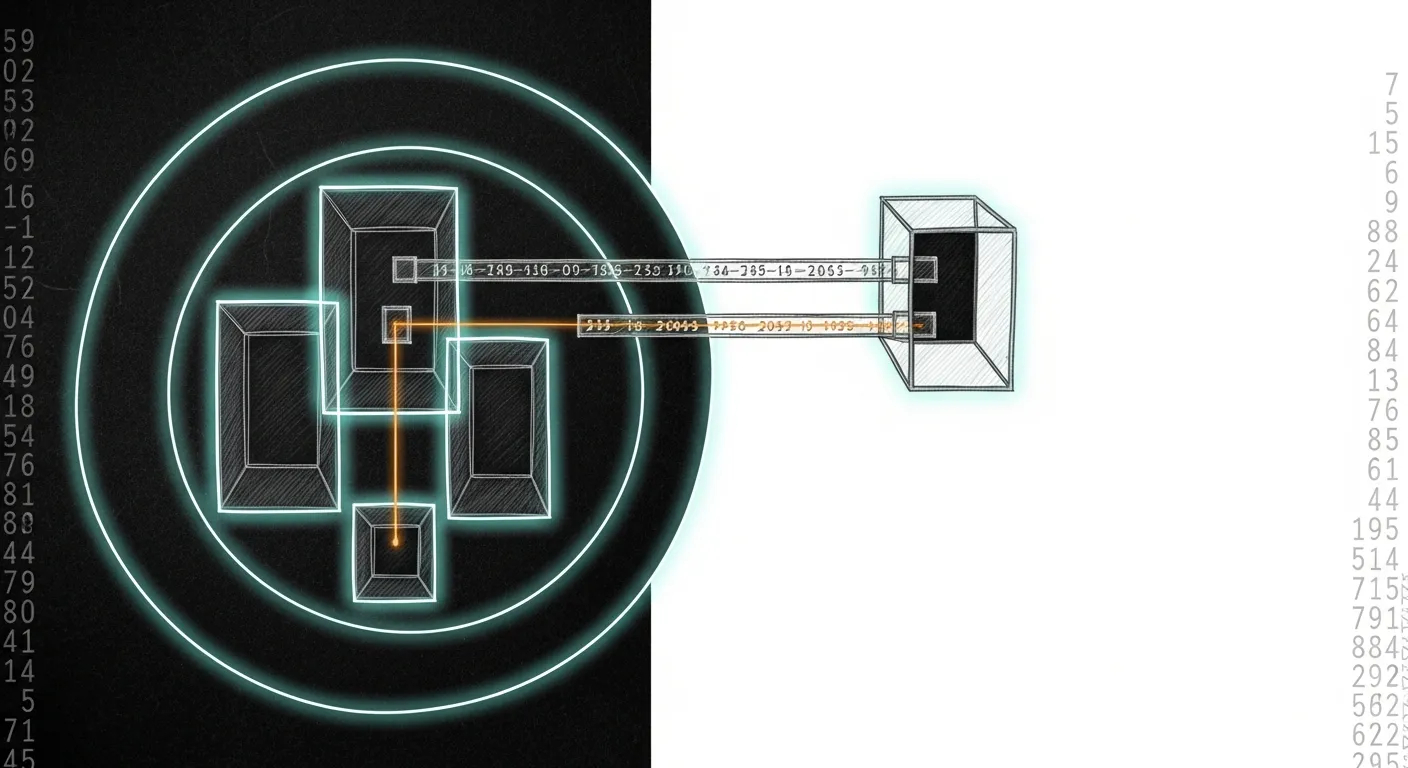
The haus was honest when it broke. That’s the only reason we caught it.
Friday night, Albert wanted TV with a friend over. The dashboard said his TV was unblocked; the TV said it wasn’t. Force-Flow’s /screen/unblock returned {"status":"unblocked"} whether or not the underlying Firewalla rules had taken. Albert watched no Netflix that evening, and that single visible failure pulled the thread on a much longer pattern: services that lie, state that accumulates without bound, and endpoints baked in as literals across a dozen files.
By Sunday night the haus had borders that mean what they say and edges that find their own services.
Layer 1: honest API, bounded state
Section titled “Layer 1: honest API, bounded state”The Friday incident had three stacked causes. /screen/unblock reported success even when one MAC silently stayed at acl=False. _block_services created Firewalla DNS rules with no expiry, so 115 stale rules had accumulated on the Living Room MACs over six days. The 2026-04-18 “temporary” MAC-pause workaround had become permanent and itself drifted.
Layer 1 closed all three:
- Per-MAC verification on every block/unblock. Any drift returns HTTP 502 with a
failuresarray; status string becomes*_partial. The dashboard can no longer be fooled by a half-success. - Every
_block_servicescall carries anexpirefence — next wake plus an hour. If force-flow crashes between block and unblock, Firewalla auto-releases. Permanent stale-rule accumulation is structurally impossible. _unblock_servicesreturns{ok, cleaned, failures}instead of blanketTrue. Fallback delete failures surface to the API.
Twelve new regression tests lock in the silent-failure paths. The deploy script snapshots before overwriting; revert is a single cp.
Layer 2: closed-loop reconciler
Section titled “Layer 2: closed-loop reconciler”Layer 1 made drift visible. Layer 2 made it close. Every 30s tick, Force-Flow compares its intended state (_blocked_screens) with observed state (Firewalla ACL polled via the bridge) and converges. Drift that persists more than 120s on a screen produces a single parent notification per episode. A nightly reaper at 04:00 sweeps DNS-block rules on managed MACs that no schedule currently calls for, and skips screens currently in _blocked_screens so it never deletes legitimate state.
When Firewalla is unreachable, the reconciler skips silently rather than alarming on a full outage; the bridge’s own /health endpoint surfaces that.
The trigger: a router reboot
Section titled “The trigger: a router reboot”Saturday afternoon, Albert’s brother rebooted the upstream router because the basement PC felt slow. Manoir’s Wi-Fi re-associated onto Bell directly instead of the Orbi mesh. Both networks default to 192.168.2.0/24 — same subnet number, different broadcast domain. ARP resolved cleanly, L3 traffic to the Firewalla didn’t. The bridge had 192.168.1.1 baked into group.json, into the SSH-fallback host string, into a console.log line. Layer 1’s honest API correctly returned 502 for hours, but the underlying cause was structural: every sanctum service had IP literals scattered through it.
The doctrine: no hardcoded endpoints
Section titled “The doctrine: no hardcoded endpoints”Three artifacts shipped together to make literals impossible to introduce silently:
| Artifact | Role |
|---|---|
tailnet/topology.yaml | Single source of truth — hosts (Tailscale MagicDNS), devices (mDNS), services (sanctum-bound), cloud (SaaS). Plus allowlist + migration_backlog. |
tailnet/audit-topology.sh | Pre-commit / CI gate. Greps for IP literals, .local hostnames, well-known ports. Anything not allowlisted or declared fails the audit. |
sanctum-presence /resolve/<name> | Centralized resolver. Reads topology, runs the discovery ladder (Tailscale → mDNS → cache → env), returns descriptor with attempts trail. 60s in-process cache. |
The Firewalla bridge had already gone adaptive earlier the same day — discovery via firewalla.local, then firewalla.home, then ARP-by-MAC, with auto-rediscovery on three consecutive SDK failures and a 60s no-success watchdog. Screen-time’s Sonos TTS endpoint at 192.168.1.10:1969 was the first non-bridge migration: now resolved through /resolve/sonos-tts.
Tailnet identity, four lanes
Section titled “Tailnet identity, four lanes”The old SSH posture — authorized_keys files, key sprawl, MBP-rebuild-loses-trust — became Tailscale-SSH-as-primary plus a Secure-Enclave cold failover. The tailnet ACL is now the source of truth for who reaches what:
| Tag | Members | Lane |
|---|---|---|
tag:sanctum-host | manoir | server-class; mutually trusting; reaches satellites |
tag:sanctum-admin | berts-mbp | dev box; silent SSH to host + satellite |
tag:satellite | chalet | remote outpost; admin can reach freely; can only reach :1949 + :4077 back; cannot SSH back |
tag:family | iPad, iPhone | parental-control PWA on :4077 only; no SSH |
Five network rules, three SSH rules, and eight machine-checkable invariants in tests + sshTests that Tailscale runs on every save. SSH from the MBP to manoir is silent — the tag is the authorization. SSH from a freshly-rebuilt untagged Mac requires Touch ID via SSO every 12h (the check action). Containment is structural: a compromised satellite can register presence on :1949 and read screen-time state on :4077. Nothing else.
Six Tailscale HuJSON gotchas pinned
Section titled “Six Tailscale HuJSON gotchas pinned”It took five save rounds to land the policy clean, Claude-for-Chrome driving the admin UI. The empirical findings are now in doctrine memory and worth listing for next time:
- ACL must be saved before machines can be tagged (
tagOwnersdefinitions unlock the per-machine tag editor). sshTestsschema is asymmetric within itself —srcis scalar,dstis[]string.sshactioncheckrejects tags insrc— only user identities can perform a biometric prompt.- Test assertion key must match the rule’s action verb — a
check-action rule needs"check": [...]in the test, not"accept". - Empty
"accept": []or"deny": []is rejected — assert default-deny with an explicit"deny": ["bert"]. - Tags persist for offline nodes — chalet was tagged while offline weeks earlier and the assignment held.
Cold failover
Section titled “Cold failover”Secretive 3.0.4 holds an ECDSA-256 key inside the Mac mini’s Secure Enclave. The public half lives in manoir’s authorized_keys labelled # sanctum-rescue 2026-04-26; Touch ID required per use; the private half cannot leave the enclave. When the tailnet itself is dead, native sshd plus the SE key gets you in. One layer, no key files anywhere on disk.
Whole / Next / Related
Section titled “Whole / Next / Related”Whole:
- Layer 1 + Layer 2 deployed live on manoir; 71 screen-time tests + 13 resolver tests green
- Adaptive Firewalla discovery, SDK-call health tracking, log timestamps everywhere
tailnet/topology.yaml+audit-topology.sh+ sanctum-presence/resolve/<name>wired and clean- Tailscale SSH primary path with four tags, eight rules, eight invariants; Secretive cold failover
- Six new doctrine memories pinned for future sessions
Next:
- Sanctum scripts inventory still has 24 Tailscale-100.x literals; migrate to MagicDNS names
- Rust port of screen-time + bridge once Layer 1+2 have soaked, per the language-maturity doctrine
- GitOps for the tailnet ACL — currently applied via admin UI; webhook deploy is the goal
Related:
- Force-Flow — the screen-time enforcement service this rebuilds
- Capacity Doctrine — same closed-loop pattern at the host level
- Language Maturity — the rule deferring the Rust port until the abstractions soak