

2026-06-21: ACL as Code
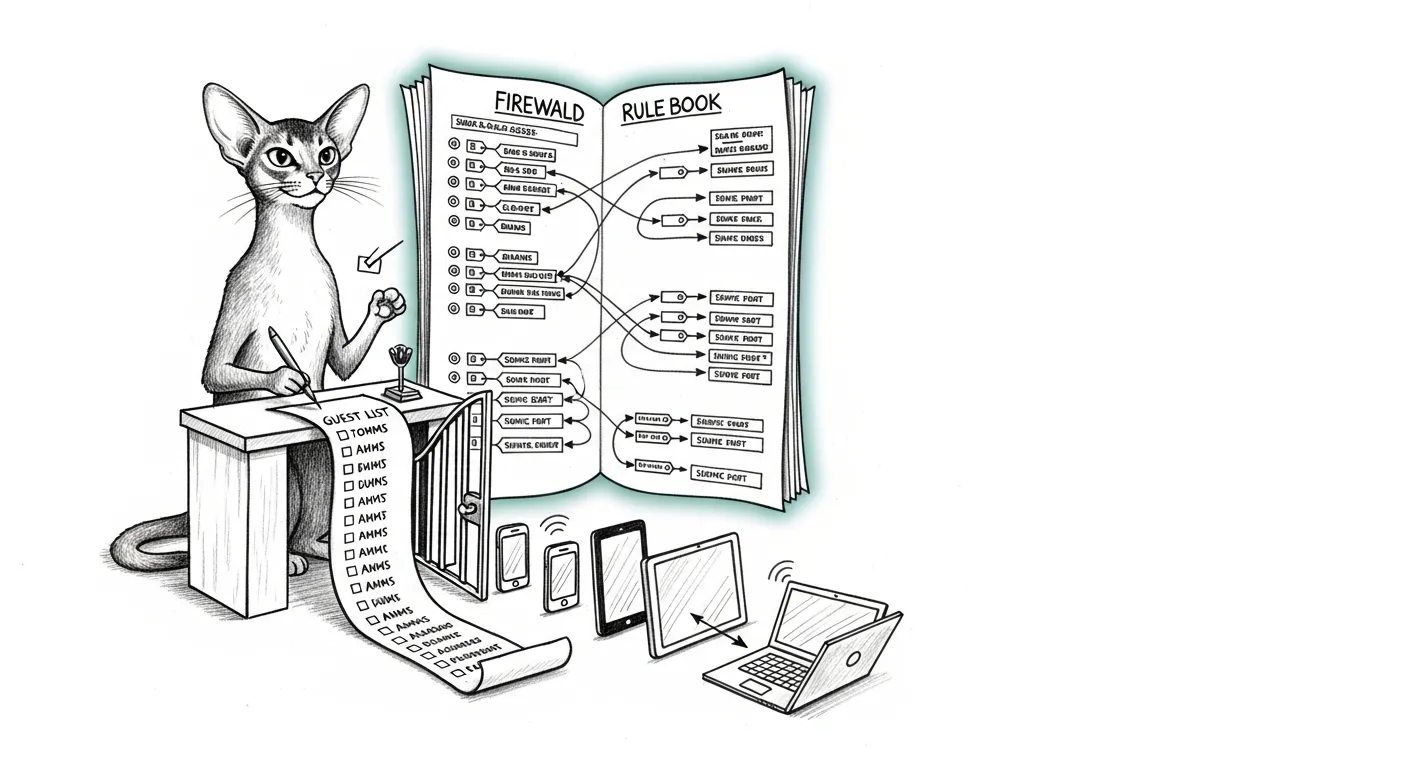
For two months, the tailnet policy file lied in its own header comment. “Apply via the admin console until the GitOps webhook (planned) lands,” it promised — save round after save round, while a human drove a browser to push every change by hand. The policy was already source-controlled. The borders already meant what they said: four tags, eight rules, machine-checked invariants. What was missing was the boring part — a way to push the file without a human in the console.
That’s what shipped today. The policy is acl.hujson; the push is
sanctum tailnet apply; the admin console is no longer in the loop.
The GitOps the file always promised
Section titled “The GitOps the file always promised”The toolkit is a first-class CLI verb. sanctum tailnet <cmd> resolves the
canonical policy directory, then forwards to the real tool:
| Command | What it does |
|---|---|
validate | Check acl.hujson against the live tailnet — no change. Tailscale runs the invariant tests server-side. |
apply | Back up the live ACL, validate, then push. The tests gate the push; a failing invariant means nothing moves. |
tag-devices | Assign the new mobile tag to the owner’s iPad/iPhone. |
status | Show the live tags currently on the mobile devices. |
setup | One-time guided OAuth onboarding. Human-run — it reads a secret. |
edit | Open acl.hujson in $EDITOR. |
The file is the source of truth; the CLI is the only sanctioned way to change the live tailnet. No more hand-editing the console, no more “did the fifth save round actually take.” Apply backs up the current live policy before it pushes, so a regression is a one-file restore.
A pocket device is convenience, not a trust anchor
Section titled “A pocket device is convenience, not a trust anchor”Tommy vets every device at the gate against the rulebook — not by whether he
trusts it, but by what its tag is permitted to reach. The new tag is the
mobile tier — named to match the existing sanctum-host / sanctum-admin
convention. It exists to answer a narrow question honestly: what should the
owner’s own phone and tablet be allowed to reach?
The answer is the haus services, and nothing else. The mobile tag grants the owner’s iPad and iPhone the post-quantum service ports — health, command-center, the Holocron dashboard, force-flow — on their real ports. It grants them no SSH and no wildcard. A laptop is a dev box; you SSH from it, you trust it with arbitrary ports. A phone is a screen you carry in a pocket and occasionally leave in a taxi. It gets to use the services; it does not get to administer the haus.
| Tier | Reaches | SSH | Wildcard |
|---|---|---|---|
sanctum-admin (dev box) | every port on the hosts | yes (tag is auth) | yes |
sanctum-mobile (owner’s phone/tablet) | the four service ports only | no | no |
family (kids’ devices) | the parental-control PWA only | no | no |
The kids’ family tier is unchanged — it stays restricted to the
parental-control PWA, exactly as before. Adding a mobile tier for the owner’s
devices doesn’t loosen anything for anyone else; least privilege is per-tier, and
each tier is granted only what its threat model earns.
OAuth-no-rotation: delete the chore, don’t automate it
Section titled “OAuth-no-rotation: delete the chore, don’t automate it”The interesting decision wasn’t how to push the policy — it was how to authenticate the push without inheriting a rotation treadmill.
A Tailscale API key expires every 90 days. Wire one into apply and you’ve
signed up for a recurring chore: rotate the key, propagate it, remember it exists,
get paged when it lapses. The tempting fix is to automate the rotation — script
the console, refresh the key on a timer. That’s automating the symptom. The
chore still exists; you’ve just hidden it behind more code that can itself break.
A Tailscale OAuth client does not expire. So apply prefers an OAuth client:
each run mints a fresh ephemeral 1-hour token via the documented
client_credentials grant, uses it for that single push, and lets it die. The
minted access token is itself a tskey-…, so it slots straight into the basic-auth
the rest of the tool already uses — no second code path. The credential that
can expire is gone; the credential that replaces it has nothing to rotate.
One command to onboard
Section titled “One command to onboard”The OAuth client still has to be created once. sanctum tailnet setup is the
guided wizard for exactly that, and it’s deliberately human-run — it reads a
secret on the terminal, never through an agent, never logged:
- Opens the OAuth clients page in the browser (guarded — degrades gracefully if
there’s no
open). - Reads the Client ID visibly and the Client secret hidden (no echo).
- Verifies before it stores — mints a real test token against the live endpoint. Nothing touches the keychain until a token has actually been minted.
- Stores both halves in the keychain, then offers to apply the policy and tag the devices in the same breath.
Step 3 is the doctrine, not a nicety. A wizard that stored the credential and then discovered it was wrong would leave you with a bad secret on disk and a green checkmark. This one proves the credential enforces — a real mint against the real endpoint — before it persists anything. Order is everything: mint, verify, then store.
Folded into the trifecta
Section titled “Folded into the trifecta”The OAuth secret is registered in the secret trifecta (1Password → SOPS → keychain) for custody and drift detection — not because it needs rotating, but because every secret the haus depends on should have a known home and a daily integrity check. It’s mirrored for custody, not rotation; the whole point of the OAuth-no-rotation insight is that there’s nothing to rotate. The trifecta just makes sure the credential exists where it’s supposed to, and notices loudly if it ever doesn’t.
What “verified” actually means
Section titled “What “verified” actually means”The toolkit was put through an end-to-end sweep against the real files — no
live tailnet writes, no secret entered, no OAuth credential present (so apply,
tag-devices, and setup were proven by structure and logic, never executed
against the live tailnet). Read-only by construction.
| Surface | Result | How it was proven |
|---|---|---|
CLI wiring (sanctum tailnet) | PASS | --help lists all six commands; the dispatcher routes tailnet) to the lib; validate runs the full chain to the live read-only endpoint and fails closed with no credential. shellcheck -x clean. |
| ACL validity + mobile-tier least privilege | PASS | Policy parses as valid HuJSON; the mobile grant targets exactly the four service ports, no wildcard, no SSH; positive and negative invariants agree with the rule; the family tier is byte-for-byte unchanged. |
| Audit gate | PASS | The audit route runs read-only and isolated from the write commands; the policy itself carries zero IP literals and zero .local names — every port is tag-relative. The only violations found are pre-existing literals in unrelated files. |
| OAuth-no-rotation auth logic | PASS | apply prefers the OAuth client and mints an ephemeral token first, falls back to the legacy key second; the endpoint, grant form, and {access_token, expires_in: 3600, tskey-…} response match Tailscale’s published docs exactly. |
| Setup-wizard structure | PASS | Opens the OAuth page (guarded), reads the secret hidden, verifies by minting before storing, upserts to the keychain, offers a default-yes apply+tag. bash -n clean. Never executed — it reads a secret. |
| Installer step + trifecta + 3-copy byte-sync | PASS | The install step replayed in a sandbox seeds the canonical policy byte-identical to the repo example; the OAuth secret is registered across all three trifecta tiers with matching keychain names. |
The doctrine, in one line: source-control the policy, push it with one verb that validates before it writes, grant a pocket device the services but never the keys, and pick a credential that can’t expire so there’s nothing left to rotate. The gate now reads from the file, not from whoever last drove the console — which is the only kind of gatekeeper Tommy ever respected.