

The maester lost his mind
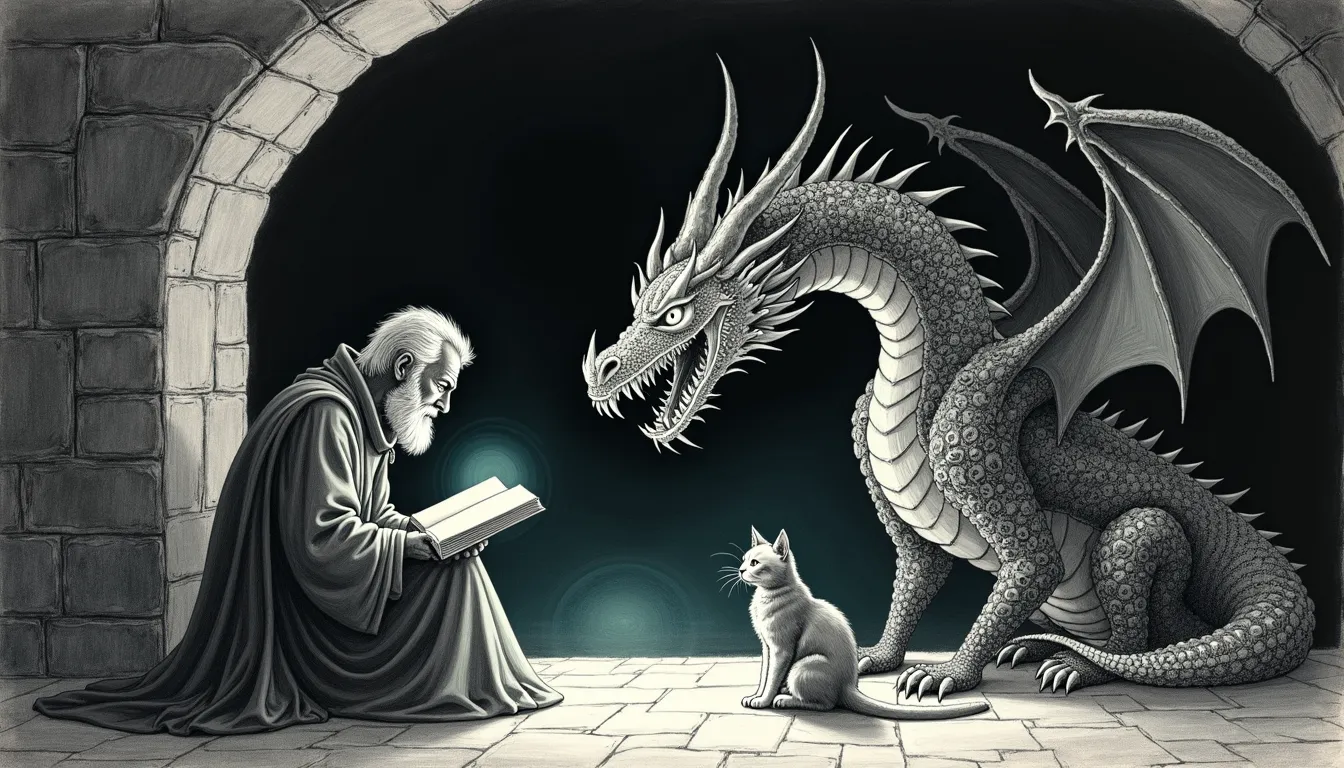
For six days, the maester of the Dragonpit answered in the wrong voice. Nobody was there to hear it.
The Dragonpit is a Matrix room where a self-hosted maester bot fields preppers’ and hackers’ questions from the local cathedral LLM. By every surface check it was healthy: the process up, the homeserver up, the room joined. It had simply been reasoning like a code assistant for days — and a chat bot nobody talks to looks exactly like a healthy one.
The shape of the drift
Section titled “The shape of the drift”Nothing was down. That was the trap. aemon.py had been running since
a 2026-07-10 restart; the Conduit homeserver was up in its OrbStack
container; the bot was parked in sync_forever connected to the room.
The only signal that something was off was six days of silence — and
silence in a chat bot is indistinguishable from “nobody’s talking to it.”
The drift lived one layer up, in the cathedral topology the bot
discovers its brain from. Over the
prior days the cathedral was consolidated: the three served models — a
35B-A3B primary, a 27B secondary, and a Devstral-24B coder on a separate
port — collapsed into a single :1337 process.
The 27B was demoted from a servable seat to a speculative-decode draft
model; Devstral was promoted from its own :3301 daemon into the secondary
seat the 27B had vacated.
Aemon’s discover_model() was never told. It still ran the heuristic it
was written with: prefer an id containing “qwen”, else the first
non-opaque id. After the consolidation the :1337 /v1/models endpoint
advertised two ids:
38740b847e4cb78f352aba30aa41c76e08e6eb46— the 35B-A3B primary, exposed as a bare 40-char snapshot hash (opaque, no “qwen” substring)Devstral-Small-2-24B-Instruct-2512-4bit— the coder, human-readable
There was no “qwen” id to prefer. The 35B primary was an opaque hash. So the heuristic fell through to the first non-opaque id — which was Devstral, a code model. The maester had been answering questions in the voice of a coding assistant for six days.
Why the heuristic missed it
Section titled “Why the heuristic missed it”The original discover_model() had two reasonable assumptions that the
consolidation broke:
- The primary is always human-readable. It wasn’t — the Rust
cathedral exposes the primary by its snapshot hash, which the
_HEX_HASH_REtreated as “opaque, skip.” - Any human-readable id is a valid maester brain. It isn’t — the coder secondary (Devstral) is a fine model for Qui-Gon’s code seat, but it’s the wrong brain for a maester who’s supposed to reason about the mesh, not write Rust.
The heuristic preferred the form of an id (readable vs opaque) over its role (champion vs coder). When the consolidation put a coder in the readable slot and a champion in the opaque slot, the heuristic picked the coder.
The fix
Section titled “The fix”A role-aware discovery: prefer a Qwen id; else the first id that is not
a coder/devstral secondary (accepting the primary even as an opaque
hash, since the primary is listed first); else the first id; else the
pinned fallback. The patch is six lines of a _NON_MAESTER denylist
inserted between the qwen-pref and the fallback:
_NON_MAESTER = ("devstral", "coder", "code-")chosen = Nonefor mid in ids: if "qwen" in mid.lower(): chosen = mid; breakif chosen is None: for mid in ids: if not any(neg in mid.lower() for neg in _NON_MAESTER): chosen = mid; breakif chosen is None and ids: chosen = ids[0]Post-patch, discover_model() resolves to
38740b84…e6eb46 — the 35B-A3B primary. The bot was restarted (KeepAlive
resurrected it under a new PID), re-joined the room, and a live-room
probe confirmed the running process logs discovered cathedral model: 38740b84…e6eb46 on its first real question. The privacy guard still
fires — a probe asking it to name its model got the maestro-voice
decline, “That is not for the pit, friend.”
The doctrine it taught
Section titled “The doctrine it taught”This is the working-twin diff in miniature. A config/topology change — the cathedral consolidation — landed without a matching change to the one consumer that depended on the old topology. The failure mode wasn’t a crash; it was a silent role swap that only surfaces when someone asks a question and notices the answer is in the wrong voice. It is the kind of thing Tommy, the haus’s Abyssinian force-ghost, would have caught on the first patrol: the most reliable monitor watches for the one thing that changed while everything else stayed green. Two hardening steps fell out of it:
- Role-aware discovery, not form-aware. “Human-readable” is not a proxy for “the right brain.” Name the roles you don’t want (coder) and exclude them, don’t try to name the role you do want by substring.
- A liveness heartbeat. Six days of silence is indistinguishable from a wedged bot. A periodic self-ping would have surfaced “still here, still on the right brain” without a human needing to ask.
There was one more loose thread. The dragonpit directory sat in the
durability doctrine’s forbidden third state — untracked and not
gitignored. It’s now tracked in sanctum-runtime (scripts/dragonpit/ —
the bot, its facts, and the launch script, plus the
com.sanctum.dragonpit-aemon LaunchAgent); secrets and logs are
gitignored.
The maester is back to reasoning about the mesh instead of writing Rust. He never noticed he’d drifted, which is exactly the problem — and exactly why the next version will ask itself, twice a day, who it is.