

TurboQuant KV Compression
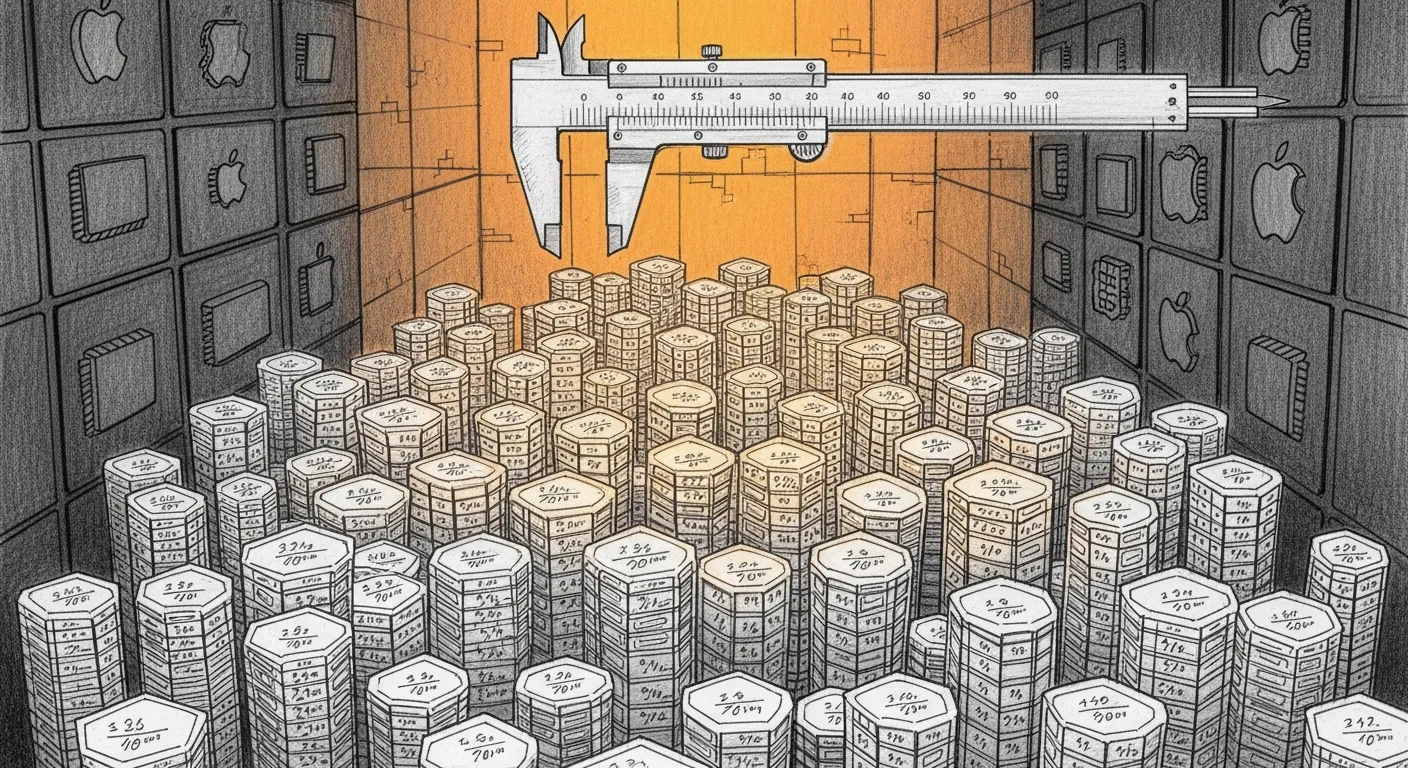
The KV cache is where long conversations go to eat memory. Every token a model generates leaves behind a pair of tensors — the keys and values from every attention head. On a Mac Mini that also runs sanctum-mlx-devstral, the Home Assistant gateway, Sanctum TTS, and a dozen other services, that cache decides whether you get to have a conversation at all.
The production model, Qwen3.6-35B-A3B-4bit, is mercifully hybrid: only 10 of its 40 layers run full attention (the other 30 are linear-attention and hold no standard KV cache), but each of those 10 hoards keys and values at 256-dim heads. TurboQuant is how we shrink that. The idea isn’t ours — Google’s ICLR 2026 paper (arXiv 2504.19874), layered on KVQuant and QJL. Our job: implement it cleanly in sanctum-mlx, wire it into Apple’s MLX runtime, and prove quality holds when the bits come down.
What ships today (Slice 4a-final)
Section titled “What ships today (Slice 4a-final)”incoming K,V tensor [1, H_kv, L, D] ↓ ┌──── keys ────┐ ↓ ▼ ▼ concat-grow plain on-device Array (bf16, bit-exact, no compression) ↓ │ ↓ ┌── values ─────┘ ↓ ▼ group-affine quantize on device → store (indices u8, scale f16, zero f16) ↓ attention: sdpa_dequant_v fused Metal kernel reads compressed V state and dequantizes it inline in registers, no full V tensor ever materializesBoth halves live in services/sanctum-mlx/src/turboquant/ and hand off to a CompressedKVCache implementing mlx_lm::cache::KeyValueCache — a drop-in for stock ConcatKeyValueCache, routed via the KeyValueCache::fused_attention trait method.
The production com.sanctum.mlx LaunchAgent passes --turboquant against Qwen3.6-35B-A3B-4bit, and the server log emits a turboquant ... ratio=1.32x line for each of the 10 full-attention layers (3, 7, 11, … 39) on every request.
The paper’s recipe — historical context
Section titled “The paper’s recipe — historical context”Slice 1 followed the TurboQuant paper literally:
keys: normalize → Hadamard rotate → Lloyd-Max quantize → QJL 1-bit sign correction → packvalues: group-affine quantize (KVQuant style) → store scale + zero per groupon every read: dequant all stored tokens → Array → attentionThis is the algorithm the protocol below validated; the bit-budget math behind the “~3.5 bits/channel quality-neutral” claim is real. The receipts (Slice 1 PPL sweep, Slice 1.5 negative result, Slice 4a kernel correctness, Slice 4a-final pivot) are preserved in agent memory.
Why a tuning protocol
Section titled “Why a tuning protocol”The first end-to-end run on a Qwen3.5-27B-4bit model with default settings (3-bit keys + QJL, 4-bit values, group_size=128) delivered this:
ppl (fp16) = 9.3055ppl (turboquant) = 28.6451Δppl = +19.34 absolute, +207.83% relativeCatastrophic. The plumbing works — no crashes, the bit stream roundtrips — but the model has forgotten what it was looking at. This is where “tune a few knobs and hope” fails. We need a protocol.
The protocol
Section titled “The protocol”Five principles, in priority order.
1. Ablate before you sweep
Section titled “1. Ablate before you sweep”Do not touch bit widths until each stage is proven correct in isolation. Loss could hide in the Array↔f32 bridge, Hadamard rotation, Lloyd-Max, QJL, or the value group-affine path — and perplexity collapse can’t tell them apart.
| Run | Config | What it isolates | Expected |
|---|---|---|---|
| A1 | 8-bit keys + 8-bit values, QJL off | Bridge + minimal-loss quant | ≈ fp16 |
| A4 | 8-bit keys + 8-bit values, QJL on | QJL math correctness at high precision | ≈ fp16 |
| A5 | 8-bit keys, 4-bit values, QJL off | Value stage only | measures value loss |
| A6 | 3-bit keys + QJL, 8-bit values | Key stage only | measures key loss |
If A1 fails, the bug is in the bridge or rotation — bisect, don’t sweep. If A5 is clean but A6 broken, it’s in the key pipeline (Lloyd-Max, QJL, rotation). And so on.
2. Sweep only after ablations pass
Section titled “2. Sweep only after ablations pass”Once each stage is proven, search the Pareto frontier. Don’t grid-search 120 cells — use a staircase:
- Fix
value_bits=8, sweepkey_bits ∈ {3, 4, 5, 6, 8}→ find minimum that meets budget - Fix
key_bitsat step-1 winner, sweepvalue_bits ∈ {2, 4, 6, 8} - Fix both, check
group_size ∈ {32, 64, 128}sensitivity - At the winning
(key_bits, value_bits), compareuse_qjl: onvsoff— does QJL actually help?
About 20 runs total; ~10 seconds each on an M4 Max once the model is cached.
3. Reproducibility
Section titled “3. Reproducibility”Every run appends one line to services/sanctum-mlx/bench/turboquant_sweep.jsonl:
{ "ts": "2026-04-18T11:40:00Z", "host": "mbp", "config": {"key_bits": 4, "value_bits": 6, "group_size": 128, "use_qjl": false, "head_dim": 256}, "eval": {"text_sha": "3f4a…", "n_tokens": 54}, "ppl_fp16": 9.3055, "ppl_tq": 10.12, "abs_delta": 0.8145, "rel_delta": 0.0876, "runtime_sec": {"fp16": 4.2, "tq": 6.8}, "verdict": "warn"}The text SHA is the comparability key — different text means a different row, not a different config. The verdict classifier:
| Verdict | Budget |
|---|---|
pass | abs_delta ≤ 0.3 AND rel_delta ≤ 5% |
warn | abs_delta ≤ 1.0 |
fail | beyond warn |
invalid | non-finite — means a bug |
4. One knob at a time
Section titled “4. One knob at a time”Never change two variables between runs. The harness reads the five SANCTUM_TQ_* knobs (see reference below) into a OnceLock before the model loads — no recompile between runs. The shell driver bench/tune.sh orchestrates the staircase; individual stages (ablation, key, value, group, qjl) run in isolation.
5. Early stop
Section titled “5. Early stop”Don’t over-measure. The protocol has two exit conditions:
- Confirmed bug (any ablation fails): stop, fix, restart — sweeping over a bug produces garbage data.
- Confirmed winner (a config meets both budgets): stop; the knee is located. Tighten later if needed.
Running the sweep
Section titled “Running the sweep”cd ~/Projects/sanctum-rsSANCTUM_MLX_TEST_MODEL=/path/to/Qwen3.5-27B-4bit \SANCTUM_TQ_KEY_BITS=4 \SANCTUM_TQ_VALUE_BITS=6 \SANCTUM_TQ_USE_QJL=false \SANCTUM_TQ_JSONL=services/sanctum-mlx/bench/turboquant_sweep.jsonl \SANCTUM_TQ_SOFT=1 \ cargo test -p sanctum-mlx --test turboquant_ppl --release \ -- --ignored --nocaptureSANCTUM_TQ_SOFT=1 disables the assertion failure on regression — during sweeps, bad numbers are data. Omit it when gating.
cd ~/Projects/sanctum-rsSANCTUM_MLX_TEST_MODEL=/path/to/Qwen3.5-27B-4bit \ ./services/sanctum-mlx/bench/tune.sh allRuns: 4 ablations, 5 key-bit cells, 4 value-bit cells, 3 group-size cells, 2 QJL cells = 18 runs, all written to bench/turboquant_sweep.jsonl. About 3 minutes on an M4 Max once the model is cached. Focused stages: ./tune.sh ablation, ./tune.sh key, etc.
# Which configs met the pass budget?jq -c 'select(.verdict == "pass")' services/sanctum-mlx/bench/turboquant_sweep.jsonl
# Pareto front: lowest abs_delta at each bit budgetjq -c '[.config.key_bits, .config.value_bits, .abs_delta] | @tsv' \  services/sanctum-mlx/bench/turboquant_sweep.jsonl | sort
For each stage boundary, record the decision in bench/ANALYSIS.md with the run rows that justified it.
Knob reference
Section titled “Knob reference”| Knob | Env | Range | Meaning |
|---|---|---|---|
key_bits | SANCTUM_TQ_KEY_BITS | 3–8 | Codebook precision per key dim. Rotation runs regardless. |
value_bits | SANCTUM_TQ_VALUE_BITS | 2–8 | Affine quant precision per value dim, per group. |
value_group_size | SANCTUM_TQ_GROUP_SIZE | 32, 64, 128 | Granularity of per-group scale/zero for values. |
use_qjl | SANCTUM_TQ_USE_QJL | true / false | Whether to add the QJL 1-bit sign correction after Lloyd-Max. Only meaningful at key_bits ≤ 4. |
head_dim | SANCTUM_TQ_HEAD_DIM | model-specific | Must match the model. Qwen3.5 = 256, Qwen2.5 = 128. |
Metal memory ceilings (orthogonal to TurboQuant, but relevant to the why):
| Flag | Env | Effect |
|---|---|---|
--metal-cache-limit-mb | SANCTUM_MLX_CACHE_LIMIT_MB | Cap MLX’s reusable buffer cache. Stops sanctum-mlx from fighting sanctum-mlx-devstral for the Metal heap. |
--metal-memory-limit-mb | SANCTUM_MLX_MEMORY_LIMIT_MB | Hard cap total MLX device memory. |
--metal-wired-limit-mb | SANCTUM_MLX_WIRED_LIMIT_MB | Cap non-swappable memory — keep hot tensors resident without starving the rest of the system. |
What “pass” means — and doesn’t
Section titled “What “pass” means — and doesn’t”The gate is abs_delta ≤ 0.3 AND rel_delta ≤ 5% on a short eval — permissive next to the paper’s sub-0.1 Δppl by design: our implementation omits some refinements (learned rotations, full TurboQuant value pipeline) to ship Slice 1. Passing it was only good enough to ship behind a flag. Promotion to default required a higher bar:
- Clean ablation pass across all stages
- Wider eval — ≥1024 tokens of real prose, not the calibration string
- Sample-quality check: 200-token continuation from the same prefix, both caches, compared
- No regression across prompt families (code, prose, reasoning)
The Bold config cleared it in Slice 1b — the evidence follows, starting with the day the protocol paid for itself.
References
Section titled “References”- TurboQuant — arXiv 2504.19874 · Google · ICLR 2026
- KVQuant — arXiv 2401.18079 · per-channel K, per-token V quantization
- QJL — arXiv 2310.19536 · AAAI 2025 · 1-bit error-corrected JL projections
- PolarQuant — arXiv 2502.02617 · rotation-based precursor
- DuoAttention — arXiv 2410.10819 · retrieval vs streaming heads — next slice
- EAGLE-3 — arXiv 2503.01840 · on-device speculative decoding — later slice
The protocol paid for itself on day one
Section titled “The protocol paid for itself on day one”The first end-to-end run on Qwen3.5-27B-4bit with scaffold defaults (3-bit keys + QJL, 4-bit values) produced a catastrophe:
ppl (fp16) = 9.3055ppl (turboquant) = 28.6451 Δppl = +19.34 (+208%)The instinct, staring at +19.34, is to turn knobs. The protocol said ablate first — and the ablation revealed what knob-turning never would: all four bit configurations gave the same +20 PPL collapse, 3-bit + QJL and 8-bit/8-bit with QJL off alike. That’s impossible if the quant math were the issue; the bug was upstream.
We added BypassMode::{IdentityPassthrough, BridgeOnly} — short-circuits that skip quantization (Slice-1 branch only; the pivot later deleted the CPU bridge they probed):
| Run | Mode | Δppl |
|---|---|---|
| A0 | IdentityPassthrough (raw concat) | 0.0000 PASS |
| A0.5 | BridgeOnly (f32 round-trip, no quant) | +20.62 FAIL |
Bisected in two runs: the f32 Array↔CPU bridge, not quantization. MLX Arrays from transpose_axes([0, 2, 1, 3]) are strided views, and as_slice::<T>() reads the raw buffer, ignoring logical layout. Without flatten() to force materialization, a logical [B, H, L, D] view yielded pre-transpose [B, L, H, D] bytes — heads and tokens permuted before any quantization ran. Fix: three lines in turboquant/cache.rs, flatten before as_slice.
Post-fix sweep — the actual Pareto frontier
Section titled “Post-fix sweep — the actual Pareto frontier”Full staircase on the same 27B model, 54-token eval, protocol compliant — one knob at a time, pre-fix rows archived as invalid.
Ablations — all stages clean
Section titled “Ablations — all stages clean”| Run | Config | Δppl |
|---|---|---|
| A1 | 8-bit / 8-bit, no QJL | 0.023 |
| A4 | 8-bit / 8-bit, QJL on | 0.014 |
| A5 | 8-bit keys / 4-bit values | 0.024 |
| A6 | 3-bit + QJL / 8-bit values | 0.137 |
Key-bit sweep (values = 8, no QJL)
Section titled “Key-bit sweep (values = 8, no QJL)”3-bit Δ=0.254 4-bit Δ=0.069 5-bit Δ=0.0906-bit Δ=0.031 8-bit Δ=0.023Keys quantize gracefully. All pass.
Value-bit sweep (keys = 4, no QJL)
Section titled “Value-bit sweep (keys = 4, no QJL)”2-bit Δ=1.22 FAIL breaks 4-bit Δ=0.12 PASS6-bit Δ=0.05 8-bit Δ=0.07Hard floor: 4-bit values. The value pathway (group-affine, no rotation) is less tolerant than keys.
QJL is regime-dependent
Section titled “QJL is regime-dependent”key_bits | values | QJL off | QJL on | |
|---|---|---|---|---|
| 4 | 6 | 0.050 | 0.184 | QJL hurts |
| 3 | 8 | 0.254 | 0.137 | QJL helps |
QJL costs one bit from the codebook. At 4-bit keys that trade is net-negative; at 3-bit keys the sign-correction wins. Rule: enable QJL only when key_bits ≤ 3.
Group size is quality-neutral
Section titled “Group size is quality-neutral”At (k=4, v=6) the group sizes 32, 64, 128 all land within 0.04 absolute — noise. Use 128 for minimum metadata overhead.
The two defensible winners
Section titled “The two defensible winners”| Config | Δppl | Rel | Est. Compression | Risk |
|---|---|---|---|---|
Safe: k=4, v=4, g=128, QJL=off | 0.123 | 1.32% | ~3.2× | solid pass |
Bold: k=3, v=4, g=128, QJL=on | 0.338 | 3.63% | ~4.0× | 0.04 over abs budget — noise-level margin |
On a 54-token eval we can’t responsibly discriminate between these at the 0.3-boundary. Principle 5: do not flip a default without a confirmed winner. Wider eval (wikitext-2, ≥1024 tokens) is the gate.
Slice 1b — wider eval, Bold vindicated
Section titled “Slice 1b — wider eval, Bold vindicated”Ran both candidates on a 1256-token corpus of real sanctum-docs architecture prose. The baseline shifted up — real prose is harder than the 54-token calibration string — but it’s fairer.
| Candidate | Δppl abs | Rel | Est. Compression |
|---|---|---|---|
Safe: k=4, v=4, g=128, QJL=off | 0.157 | 1.18% | ~3.2× |
Bold: k=3, v=4, g=128, QJL=on | 0.196 | 1.47% | ~4.0× |
Both decisively inside the 0.3 abs / 5% rel budgets. The wider sample firmed up the short eval’s hint: Bold’s borderline 0.34 tightened to 0.20, Safe’s 0.12 drifted to 0.16.
TurboQuantConfig::default() on main is still key_bits=3, value_bits=4, use_qjl=true — the scaffold had the right intent; the protocol made it evidence. Slice 4 then made the fused sdpa_dequant_v kernel the production path, retiring the O(T²) CPU round-trip that had justified the opt-in caution. The flag flipped; only value_bits and value_group_size steer storage now.
What stays narrow is model coverage: only the 35B and the original Qwen3.5-27B are validated. Qwen2.5-Coder, Gemma4-31B, and the rest still need their own protocol run — see Slice 1c for the wall we hit trying.
Slice 1c — cross-architecture de-risk (ecosystem wall + a finding)
Section titled “Slice 1c — cross-architecture de-risk (ecosystem wall + a finding)”We tried to validate the Bold default on a non-Qwen3.5 architecture before committing to Gemma-4 Rust work. It hit an ecosystem wall — and produced a finding anyway.
Python mlx-lm 0.29.1 (latest on Python 3.9) supports qwen2, qwen3, gemma3, llama4, and more — but not qwen3_5 (our validated model) and not gemma4 (the fine-tune target). Our Rust mlx-lm fork has the inverse: qwen3_5 and qwen3, but not qwen2 or any gemma.
Python ∩ Rust = { }No model type loads in both stacks. Cross-validation means either porting TurboQuant to Python as a custom KVCache subclass (~2–3 hr) or adding an architecture to the Rust fork (~4–6 hr Qwen2, ~8–16 hr Gemma-4). Neither is a quick de-risk.
We ran Python mlx-lm’s built-in QuantizedKVCache (plain affine per-group quant, not TurboQuant’s rotation path) on Qwen2.5-Coder-7B (head_dim=128, 7:1 GQA), same 1238-token eval:
| KV bits | PPL | Δppl abs | Verdict |
|---|---|---|---|
| fp16 baseline | 25.99 | — | — |
| 8 | 25.94 | 0.05 | PASS |
| 4 | 339,210 | 339,184 | FAIL — catastrophic |
| 3 | 712,519 | 712,493 | FAIL |
| 2 | 648,756 | 648,730 | FAIL |
A PPL of 339,210 on a ~152k-vocab model is worse than uniform random — not a quality gradient, a cliff. Stock 4-bit affine quant isn’t losing information, it’s poisoning state.
That sets the forward slices:
| Slice | What | Gate |
|---|---|---|
| 1d | Port TurboQuant to Python mlx-lm as a custom KVCache (~3-hr session; validates qwen2 + qwen3 + gemma3) | should precede Slice G |
| G | Gemma-4 Rust loader | upstream Python gemma4 support AND Slice 1d passing |
| Q2 | Qwen2 Rust loader — unlocks Qwen2.5-Coder in production | adjacent practice for Slice G |
Details in bench/ANALYSIS.md and the raw JSON at bench/qwen25coder_kvq_validation.json.
What we carry forward
Section titled “What we carry forward”Two things carry forward:
- Any MLX Array read via
as_sliceafter a transpose must flatten first. Documented incache.rs; future backends follow suit or justify skipping. - The value pathway is the quality floor, not the key pathway. Any compression plan should prioritize better value quantization (rotation? learned group scales?) over squeezing key bits.
Neither was visible from the perplexity number alone; both fell out of ablating before sweeping. The compression is invisible now — a ratio=1.32x line in a log nobody reads. The best infrastructure is the kind you get to forget.
See also
Section titled “See also”- sanctum-mlx architecture — the server this lives inside
- eval harness — the broader evaluation philosophy
- engineering discipline — why we measure twice